
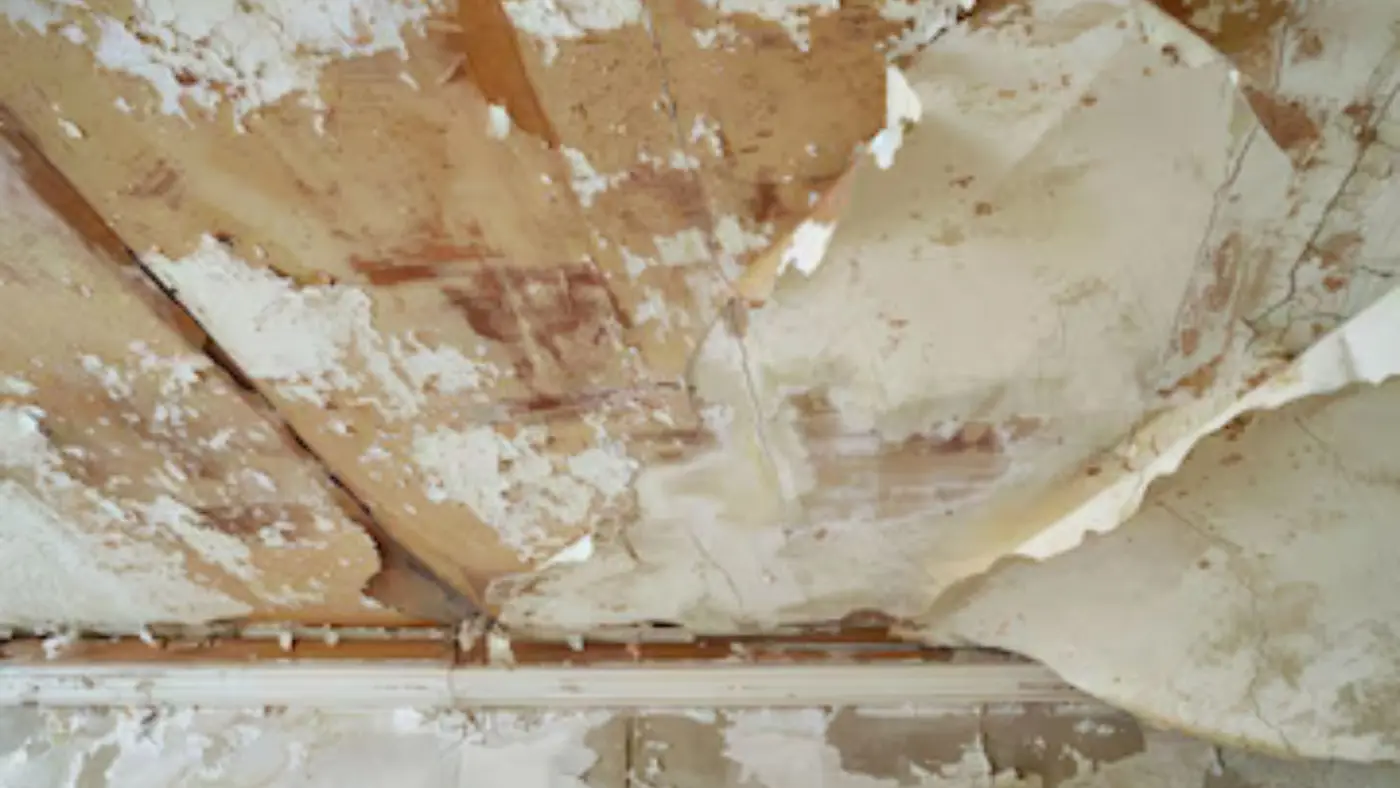
A sagging ceiling is a safety problem first
If your ceiling is sagging, bulging or dripping, move people and pets out of the room and stay out from under the low spot. Wet drywall is heavy. A bulge the size of a dinner plate can hold a gallon or more of water and drop all at once, along with wet insulation.
Do not poke the ceiling just to see what happens. The steps below cover the one case where relieving the water makes sense, and how to do it without getting hurt.
Lights, fans and wiring
If water is coming through a light fixture or near a ceiling fan, leave that switch off. Cut power to that circuit at the panel only if the panel is dry and you can reach it safely. If you cannot, call the utility or 911 about the electrical risk before you call anyone else.
When it is safe to relieve a bulge
If the bulge is small, you can reach it from the side, and the power is off, place a bucket and a plastic tarp on the floor first. Stand to the side and not under it. Use a screwdriver to pierce a small hole at the lowest point so the water drains in a controlled stream, not as a collapse.
Skip this if the ceiling is wide, cracked, or very low, or if you cannot move furniture out of the way. In that case, leave it alone and call for help. A controlled drain beats a sudden collapse, but neither beats having a crew handle it.
What the symptoms usually mean
| Symptom | What it often means | How urgent |
|---|---|---|
| Sagging or bulging drywall | Water is pooled above the ceiling | Urgent, keep clear and call |
| Bubbling or peeling paint | Moisture behind the paint layer | Same day, find the source |
| Brown ring with a darker edge | Repeated wetting from the same spot | Soon, source is probably ongoing |
| Drip only when it rains | Roof, flashing or gutter issue | Soon, tarp or patch before next storm |
| Drip when a shower or sink runs | Plumbing above the ceiling | Urgent, stop using that fixture |
| Damp in summer, near an air handler | AC condensate line or drain pan | Soon, shut the system off |
A brown ring that is dry and fading may be an old leak that already stopped. A ring that is damp, growing or has a darker outer edge points to an active source.
Finding the source
- Roof leaks show up during or after rain, often far from where the roof is damaged, since water runs along rafters.
- Plumbing leaks show up when a shower, tub, toilet or dishwasher on the floor above is used.
- AC condensate leaks appear when the system runs and sit under an attic air handler or a wall unit.
- Condensation on cold ducts can drip in humid weather even when nothing is broken.
A simple test helps. Note the time of every drip and what was running. If the ceiling drips only when the bathroom above is used, the fix is plumbing. If it drips during rain, the roofer comes first. Your water damage repair contractor will want the answer before repairs begin, because a new ceiling under a leaking source fails again.
Ceiling already bulging or dripping?
Call 24/7 dispatch. A crew can make the room safe, find the wet area and start removing water.
Call (909) 505-3870What a pro checks before touching the ceiling
A technician starts with a moisture meter and a thermal imaging camera. The camera shows cool, wet zones across the ceiling and walls, and the meter confirms what is wet and what is only cold. Then the crew opens the ceiling where the water collected, often by cutting a clean inspection hole.
They check the framing, the insulation above and any wiring that runs through the wet zone. Wet insulation holds water for a long time and loses its R-value, so it often has to come out. If the water was from a toilet or a sewer line, the crew treats it as contaminated and removes porous materials, not just dries them.
Drying, insulation and what comes after
Once the source is fixed, wet materials are removed, and the cavity is dried with air movers and LGR dehumidifiers. Drying wet materials within about 24 to 48 hours helps prevent mold growth, which is one reason not to wait on a sagging ceiling. Where the water has reached walls below, the same process continues down the wall.
Only after readings show the framing is dry does the rebuild start. That is when drywall, texture and paint go back. Our team also handles emergency water removal for ceilings that have already let go.
Insurance and paperwork
Photograph the damage before anything is moved or cut. Sudden and accidental water damage is often covered, while long, slow leaks and roof wear often are not, so check your policy and ask your insurer. California Department of Insurance guidance says to stop the leak and avoid permanent repairs before an adjuster inspects, and reasonable emergency protection costs can be reimbursed, so keep receipts.
Water Damage Notes for Loma Linda
The city's hillside code chapter names reducing flood, fire, earthquake and erosion risk among its purposes, and about 1,157 acres of South Hills land is designated hillside conservation. If your home sits below those slopes, watch your roof, gutters and yard drainage before a heavy rain.
Clear gutters and downspouts in the fall, check that runoff is directed away from the house, and look at the ceiling after the first big storm. A small stain found early is cheaper to deal with than a collapsed section.
Nearby areas we serve
Crews also cover our neighbors to the east. See the Redlands water damage page for that area, or the Highland service page for homes farther northeast, closer to the foothills.
Ceiling damage questions
Should I pop a bulging ceiling?
Only if it is small, power is off, a bucket and tarp are in place and you can stand to the side. Otherwise, stay clear and call. A crew can drain it safely.
Can I just paint over the stain?
Not before the source is fixed and the materials are dry. Paint hides the ring, but it does not stop moisture, and the stain can bleed back through.
Does wet ceiling insulation need to be replaced?
Usually yes if it was soaked, because it holds water and stops insulating well. A technician with a moisture meter can tell you which parts to remove.
How do I tell a roof leak from a plumbing leak?
Track when it drips. Rain points to the roof, and bathroom or kitchen use points to plumbing. A constant drip regardless of weather or fixtures suggests pressurized plumbing or an AC line.
I live below the South Hills in Loma Linda. Should I worry after rain?
Check gutters, downspouts and the ceiling after heavy rain. The city designates South Hills land for hillside conservation, so runoff can travel toward lower homes. Ask a roofer if you see stains after storms.