
A word before the cost factors
Not every home in the area has a basement. Many have only a crawl space, a slab, or a garage that sits a step below grade, and some have a finished lower level under a hillside lot. The factors below apply to any low area where water collects, so read basement as shorthand for the lowest enclosed space in your house.
We do not publish dollar figures here because the same square footage can be a small job or a large one. The honest answer to what it costs is a list of what pushes the price up or down, and a written scope after someone has looked at the space. Call dispatch to get your real number.
The main cost factors
- How much material is affected. Mold on a few square feet of framing is a different job from mold across drywall, carpet pad and stored boxes.
- Whether the area is still wet. If water keeps coming in, drying and source repair must happen first, and they add time and equipment.
- The type of material. Hard surfaces like concrete and sealed framing can often be cleaned. Porous materials like drywall, insulation and carpet usually have to be removed.
- Containment and air handling. Plastic barriers, negative air machines and HEPA air scrubbers protect the rest of the house, and larger or harder-to-seal spaces take more setup.
- Access and layout. A tight crawl space is slower and harder to work in than an open finished room.
- Testing and clearance. Whether you want an independent tester before and after changes how much coordination the job needs.
- The rebuild. Replacing drywall, trim, flooring and insulation after removal is often a separate scope and can be a large share of the total.
Why drying comes first
Mold needs moisture. If a lower level stays damp from a leak, groundwater or a failed sump, removing the growth without fixing the water is a short-lived fix. A responsible scope starts with the water source and a drying plan.
Drying uses air movers, LGR dehumidifiers and moisture meters, and it usually takes three to five days, longer for concrete, plaster or thick insulation. Our mold remediation work and the flood damage restoration team often overlap here because a lower level that was flooded needs both.
Want a scope before you decide?
Call dispatch any time. A technician can inspect the space, read moisture, and explain what is wet, what is affected and what a written scope should cover.
Call (909) 505-3870Lower levels that are not basements
A crawl space hides problems because nobody looks at it. Water from a slow supply leak or poor drainage can sit for months, wet the floor framing above and grow on the underside of subfloor boards. A below-grade garage can collect runoff from the driveway and damp the bottom of its drywall.
In both cases the inspection looks at the framing, vapor barrier and insulation, not just the visible surface. That is why a written scope for a crawl space reads very differently from a scope for a finished room, even when the visible problem looks similar.
What containment does and why it matters
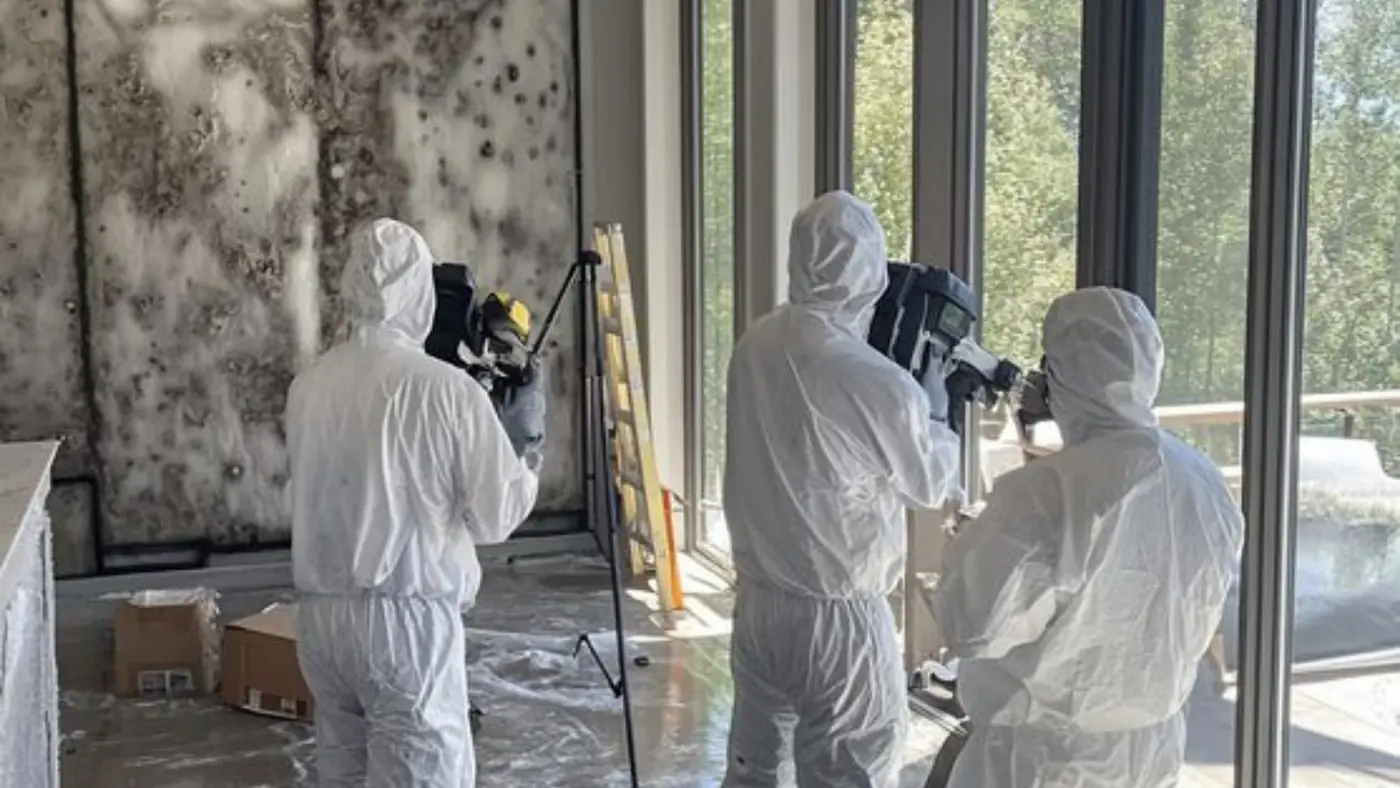
Containment keeps disturbed material and spores in the work area. Crews build a sealed zone with plastic sheeting, set up negative air so air flows into the zone rather than out, and filter exhaust through HEPA air scrubbers. Workers wear protective gear and remove material in sealed bags.
Skipping containment may make a quote cheaper, but it may also spread dust through ducts and upstairs rooms. Ask any bidder to describe its containment plan in writing. S520 is the published industry standard for mold remediation, and you can ask whether the crew works to it.
What an itemized scope should show
| Line item | What it should say | Why it matters |
|---|---|---|
| Source of moisture | What caused the water and who will fix it | Without this, growth can return |
| Affected area | Rooms, surfaces and approximate measurements | Lets you compare two bids fairly |
| Drying | Equipment, number of days and monitoring | Drying drives much of the timeline |
| Containment and air handling | Barriers, negative air, HEPA filtration | Protects the rest of the house |
| Removal and disposal | Which materials come out and how they are bagged | Defines how much rebuild is needed |
| Testing | Who tests, when, and who pays | Keeps testing independent |
| Rebuild | Included or excluded, and what finish level | Often the biggest hidden difference between bids |
Why quotes differ
One bid may include drying and rebuild while another covers only removal. One may assume you will hire a separate tester. One may price a full containment zone while another seals a doorway with a sheet. The most expensive quote is not always the best, and the lowest rarely lists everything.
Line them up side by side against the table above. A company that will not put its scope in writing is giving you a number without a plan.
Water Damage Notes for Loma Linda
The city's FEMA page says a Letter of Map Revision was issued for the San Timoteo Creek channel, which may affect a homeowner's flood insurance requirement. It lists flood map panels dated August 2008 and sends questions to Community Development. For anyone with a lower level, check the FEMA Flood Map Service Center for your address and ask your lender and insurer what applies.
That matters for mold costs because a standard homeowners policy does not cover flood, and flood coverage is separate. Knowing which side of that line your lower level sits on before water arrives changes whether a mold job lands on your insurer or on you.
Insurance and the rebuild
Mold from a covered cause may be covered, but coverage depends on your policy and on how quickly the water was addressed. Stop the leak, dry promptly and keep receipts for emergency steps. Do not make extensive permanent repairs before an adjuster has inspected.
We support homes across the area, including Colton residences and properties in San Bernardino, and the same scope rules apply in each.
Mold cost questions
Why can't you give me a price over the phone?
Because the price depends on what is wet and what is affected, and neither can be known from a description. An inspection shows the area, the materials and the moisture, and then the scope can be written.
Does a crawl space cost more than a finished basement to remediate?
It can. Tight access slows the work and limits equipment. A finished room has more material to remove and rebuild. Each case turns on its own scope.
Should the testing company be the same as the remediation company?
Many homeowners prefer an independent tester so the person checking the work has no stake in the result. Ask your remediation company whether it supports third-party clearance.
Will a dehumidifier alone fix a damp lower level?
It helps control humidity, but it does not remove growth or dry soaked framing and insulation. If material is already affected, remediation and drying are needed.
In Loma Linda, how do I check whether my lower level is in a flood area?
Look up your address in the FEMA Flood Map Service Center and ask Community Development about the San Timoteo Creek map revision. Then ask your insurer what your policy covers.